Recommended
200704
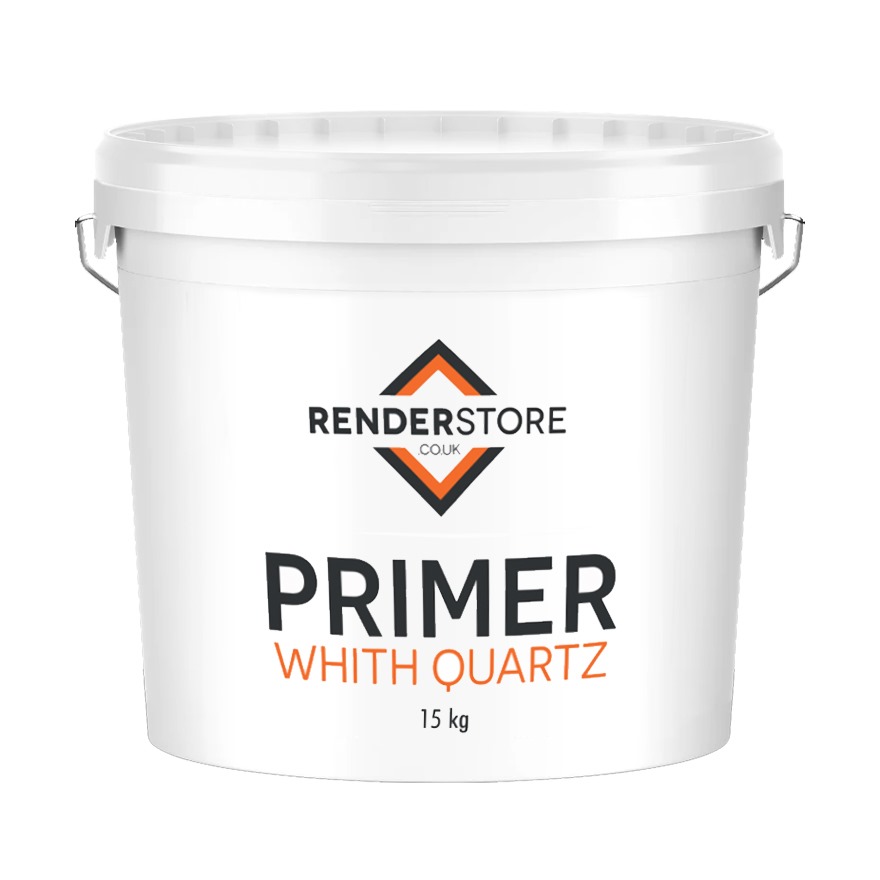
RS - Primer White - 15kg
What is RS - Primer?
RS - Primer is a professional-grade, quartz-filled priming paint designed to create a high-grip "key" on substrates before applying silicone, acrylic, or mineral renders. It reduces substrate absorbency, improves adhesion, and prevents "ghosting" by ensuring the background color does not bleed through the final decorative finish.
| Technical Specification | Value / Detail |
|---|---|
| Material Base | Synthetic resins with quartz mineral fillers |
| Application Method | Brush or Roller |
| Average Coverage | 0.2 to 0.5 L/m² (approx. 20–50m² per 10L tub) |
| Drying Time | 3 to 6 hours (weather dependent) |
| Color | White (can be tinted to match render) |
| Compatible Renders | Silicone, Acrylic, and Silicate-Silicone |
| Substrate Use | Concrete, EWI Basecoats, Plasterboard, Masonry |
- Why is RS - Primer necessary before rendering?
Applying RS - Primer is a critical step because it creates a rough, sandpaper-like surface (mechanical key) that allows the render to "grip" the wall. It also balances the suction of the wall, ensuring the render dries evenly and doesn't crack or peel. - Can I dilute RS - Primer with water?
No. RS - Primer is a ready-to-use product. Diluting it with water thins the resin and the quartz distribution, which can significantly weaken the bond between the substrate and your expensive final render. - Should I tint the primer to match my render color?
Yes. For dark or vibrant renders, we highly recommend tinting RS - Primer to a similar shade. This ensures that if the render is applied slightly thin in any areas, the white background of the wall will not show through.
- Preparation: Ensure the basecoat or substrate is fully cured, dry, and free of dust.
- Mixing: Stir the tub thoroughly with a low-speed drill. The quartz fillers often settle at the bottom and must be evenly distributed.
- Application: Apply a single, even coat using a wide brush or paint roller.
- Edge Work: Use a brush around window reveals and corners to ensure 100% coverage in difficult areas.
- Curing: Allow the primer to dry for at least 3 to 6 hours. It should be "scratch-resistant" to the touch before you begin rendering.
- Pro-Tip for Hot Weather: In 2025's warmer summers, avoid priming in direct, scorching sunlight. If the primer dries too fast, the resins may not bond correctly with the substrate. Always try to work on the shaded side of the building.
- Pro-Tip for EWI Systems: If you are using an External Wall Insulation system, the primer acts as a vital bridge. It protects the reinforced basecoat and ensures the silicone topcoat performs as a truly hydrophobic, self-cleaning surface.